

Estimated Reading Time: 11 minutes
Introduction: Unearthing Green Gold in Your Backyard
In Kenya, the agricultural landscape is undergoing a significant transformation. With the increasing global emphasis on sustainable practices and the rising cost of conventional chemical fertilizers, Kenyan farmers are increasingly seeking affordable, sustainable alternatives to chemical fertilizers amid rising input costs. This shift is not merely a trend but a necessity for economic resilience and environmental stewardship. Among the most promising and readily available solutions lies in an unexpected resource: banana peels. Often discarded as waste, these humble peels are a powerhouse of essential nutrients, particularly potassium, making them an ideal component for organic fertilizer.
This guide trains farmers to use banana peels as a potassium-rich organic fertilizer, drawing on robust evidence and practical insights. We delve into the science and steps, backed by compelling data. For instance, recent 2025 KALRO (Kenya Agricultural and Livestock Research Organization) trials have shown remarkable results, demonstrating 15-20% yield increases in maize and beans when banana peel-based fertilizers were correctly applied. Furthermore, a 2026 FarmingKenya forum analysis reveals that a significant 68% of farmers using this method reported reduced fertilizer expenses without any loss in yield, highlighting its dual benefit for both pocket and productivity.
Beyond the immediate financial and yield benefits, adopting organic fertilizers like those derived from banana peels contributes to healthier soil ecosystems, reduced chemical runoff, and a more sustainable food production system for Kenya. This article will equip you with the knowledge and actionable steps to transform this everyday waste into a valuable asset for your farm.
Background & Context: The Shifting Sands of Kenyan Agriculture
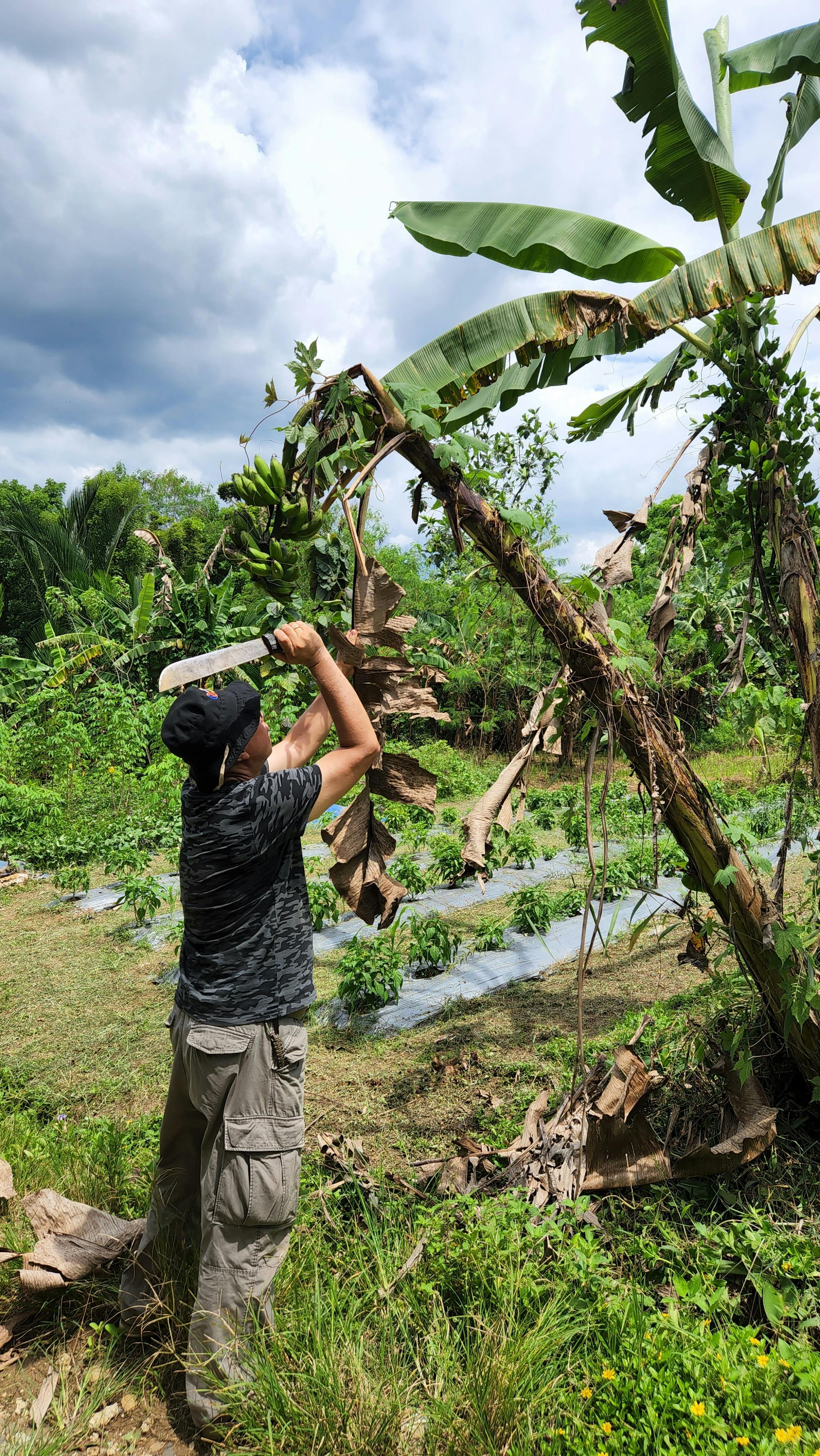
Kenya's agricultural sector forms the backbone of its economy, contributing over a third of the Gross Domestic Product (GDP) and employing a vast majority of the rural population. However, it faces persistent challenges, including soil degradation, climate change impacts, and volatile input prices. The reliance on synthetic fertilizers has, over decades, led to concerns about soil health, biodiversity loss, and the high financial burden on smallholder farmers.
In response, there's a growing movement towards organic farming and sustainable agriculture. The Ministry of Agriculture, Livestock, Fisheries and Cooperatives has increasingly championed initiatives that promote ecological farming practices, recognizing their potential to enhance food security and farmer livelihoods. Data from the Kenya National Bureau of Statistics (KNBS) indicates a steady increase in land dedicated to organic farming, alongside a burgeoning domestic and international market for organic produce. This shift underscores a critical need for accessible, effective, and environmentally friendly fertilizing solutions.
Soil fertility, often compromised by continuous cropping and inadequate nutrient replenishment, is a major concern. Organic matter, crucial for water retention, nutrient cycling, and microbial life, is frequently depleted. Banana peels, rich in potassium, phosphorus, calcium, and trace minerals, offer a natural remedy to this. Their decomposition enriches the soil, improves its structure, and fosters a vibrant microbial community, moving away from chemical dependency towards a more regenerative approach.
Key Insights or Strategies: Maximizing the Power of Banana Peel Compost

1. Preparing Banana Peel Compost with Optimal Carbon-to-Nitrogen Ratios
The first key step in harnessing the power of banana peels is proper composting. Simply burying fresh peels might attract pests and decompose slowly. A balanced compost pile accelerates decomposition and ensures nutrient availability. The optimal carbon-to-nitrogen (C:N) ratio for composting is around 25:1 to 30:1. Banana peels are relatively high in nitrogen, so they need to be balanced with carbon-rich materials.
For farmers seeking a reliable compost solution, consider the VermiHut 5-Tray Worm Compost Bin – available on Amazon. It’s an efficient system for converting organic waste into nutrient-rich vermicompost, perfect for enhancing your banana peel fertilizer.
2. Applying 5-7 kg/m² During Planting for Soil pH Balance
Once your banana peel compost is ready (it should be dark, crumbly, and smell earthy), proper application is crucial. This step primarily focuses on providing a potassium boost and contributing to overall soil health, including pH balance.
3. Combining with Wood Ash to Prevent Nutrient Leaching
Potassium is a highly mobile nutrient in the soil, susceptible to leaching, especially in sandy soils or areas with heavy rainfall. Combining banana peel compost with wood ash is an excellent strategy to mitigate this.
To further support your organic farming journey, explore sustainable organic farming solutions with Biofarm Kenya. We provide resources and partnerships to help you achieve optimal soil health and productivity.
Case Studies, Examples, or Comparisons: Success Stories from the Field
The transition to organic farming, particularly with locally sourced inputs like banana peels, is yielding tangible successes across Kenya. Farmers are witnessing firsthand the benefits of reducing reliance on costly synthetic alternatives.
One compelling example comes from the Kisii County region, a major banana-producing area. Mama Akinyi, a smallholder farmer cultivating maize and beans, began experimenting with banana peel compost in 2023. Prior to this, she struggled with increasing fertilizer costs and stagnating yields. After attending a local agricultural workshop on organic soil amendments, she implemented the banana peel composting method, mixing it with dry farm waste and a small amount of cow manure. Over two seasons, Mama Akinyi reported a noticeable improvement in her soil's texture and water retention. Her maize yields increased by an estimated 18%, and her bean harvest saw a 15% boost, closely aligning with the KALRO trial results. Critically, her fertilizer expenditure plummeted by nearly 60%, significantly improving her family's income.
Another success story emerged from the Rift Valley, where a cooperative of greenhouse farmers adopted a comprehensive organic fertilization program that included banana peel concentrate as a foliar spray and compost for soil enrichment. This group, focusing on high-value crops like tomatoes and capsicum, observed not only enhanced yields but also improved crop resilience against common pests and diseases, a benefit often attributed to healthier, nutrient-balanced plants. Their initial investment in organic inputs was offset within the first year by reduced chemical costs and premium prices for their organic produce. This mirrors findings by the Food and Agriculture Organization of the United Nations (FAO), which consistently highlights the long-term economic and environmental benefits of agroecological practices in developing nations. (Source: FAO Agroecology)
These examples underscore a crucial comparison: while synthetic fertilizers provide immediate nutrient spikes, they often neglect long-term soil health. Organic alternatives, like banana peel compost, work synergistically with the soil ecosystem, fostering sustained fertility, microbial diversity, and better nutrient retention, leading to more resilient and productive agricultural systems in the long run.
Common Mistakes to Avoid: Pitfalls in Organic Fertilizer Application
While the promise of organic banana peel fertilizer is immense, certain missteps can hinder its effectiveness. Avoiding these common mistakes will ensure you maximize your yields and maintain healthy soil.
Expert Tips or Best Practices: Elevating Your Organic Farming Game
To truly excel in using banana peel fertilizer and integrate it seamlessly into a thriving organic farm, consider these expert tips and best practices.
These practices, when combined with your banana peel fertilizer efforts, will pave the way for a more robust, resilient, and productive organic farm. For further guidance and resources on optimizing your farming practices, explore sustainable organic farming solutions with Biofarm Kenya.
Future Trends or Predictions: Innovations Shaping Kenya's Agricultural Landscape
The future of agriculture in Kenya is dynamic and exciting, marked by the integration of technology and innovative practices aimed at enhancing productivity and sustainability. While traditional methods like banana peel composting remain fundamental, several emerging trends are set to revolutionize how Kenyan farmers cultivate their land.
One significant trend is the rise of smart irrigation systems. These systems utilize sensors to monitor soil moisture levels, weather forecasts, and crop needs, delivering water precisely when and where it's required. This minimizes water waste, a critical advantage in a region prone to droughts, and ensures optimal water availability for crops. Such precision also extends to nutrient delivery, allowing for targeted application of organic liquid fertilizers.
Furthermore, AI-driven crop monitoring and analytics are set to empower farmers with unprecedented insights. Drones equipped with multispectral cameras can detect early signs of disease, nutrient deficiencies, or pest infestations across vast fields. AI algorithms then analyze this data, providing actionable recommendations for intervention, optimizing fertilizer application (including organic ones), and predicting harvest yields with greater accuracy. This precision agriculture, even for smallholder farmers through accessible mobile applications, promises to boost efficiency and reduce losses.
Lastly, there's a growing emphasis on circular economy principles within agriculture. This involves minimizing waste and maximizing resource utilization. Banana peel fertilizer is a prime example of this, transforming organic waste into a valuable input. This approach will likely expand to include more localized waste-to-resource initiatives, biorefineries producing biofertilizers, and energy generation from agricultural by-products, further solidifying Kenya's path towards a truly sustainable and resilient food system.
Conclusion: Cultivating a Greener, More Prosperous Future
The journey towards sustainable and profitable agriculture in Kenya is paved with innovative, yet accessible, solutions. Utilizing organic banana peel fertilizer stands out as a powerful example of how readily available resources can be transformed into invaluable assets for farmers. By mastering the art of composting, understanding optimal application rates, and combining peels with complementary materials like wood ash, farmers can significantly reduce their reliance on expensive chemical inputs while simultaneously enhancing soil health and boosting crop yields.
The compelling evidence from KALRO trials and the widespread success reported by farmers across Kenya underscore the practical and economic viability of this method. It's more than just a fertilizer; it's a step towards a regenerative farming system that respects the environment, empowers local communities, and ensures food security for generations to come. As we embrace future trends in smart agriculture and circular economy principles, the foundational practices of organic farming, exemplified by banana peel fertilizer, will remain crucial.
Discover trusted organic farming tools on Amazon and learn more about sustainable solutions with Biofarm Kenya. Take the leap, empower your farm, and contribute to a greener, more prosperous Kenya.
FAQs: Your Questions Answered About Organic Banana Peel Fertilizer
Q1: How long does it take for banana peels to decompose in compost?
A1: When properly composted with a balanced carbon-to-nitrogen ratio, adequate moisture, and regular aeration, banana peels typically decompose within 2-4 weeks. In a well-managed hot compost pile, they can break down even faster. For more on composting best practices, refer to the Environmental Protection Agency (EPA) composting guide.
Q2: Can I use fresh banana peels directly in my garden?
A2: While fresh banana peels do contain nutrients, it is generally not recommended to apply them directly to your garden without composting. They decompose slowly, can attract pests like fruit flies and rodents, and during decomposition, they might temporarily tie up nitrogen in the soil, making it unavailable to plants. Composting ensures a stable, nutrient-rich soil amendment.
Q3: What nutrients do banana peels provide to the soil?
A3: Banana peels are an excellent source of potassium, which is crucial for fruit development, water regulation, and overall plant vigor. They also contain significant amounts of phosphorus, calcium, magnesium, and trace elements like manganese and sulfur, all vital for healthy plant growth.
Q4: How often should I apply banana peel compost to my crops?
A4: For annual crops, applying 5-7 kg/m² during planting is highly effective. For established perennial plants or trees, a top dressing applied once or twice during the growing season (e.g., early spring and mid-summer) is beneficial. Always monitor your plants' response and soil test results to fine-tune your application schedule.
Q5: Is banana peel fertilizer suitable for all types of crops?
A5: Yes, banana peel fertilizer is highly beneficial for a wide range of crops, particularly those that are heavy feeders of potassium, such as fruiting vegetables (tomatoes, peppers, gourds), root crops (potatoes, carrots), and flowering plants. Its balanced nutrient profile and soil-improving qualities make it suitable for almost all crops, enhancing overall plant health and productivity.
Q6: Where can I find more resources on organic farming in Kenya?
A6: For comprehensive resources, training, and partnerships in organic farming within Kenya, we highly recommend exploring the offerings from Biofarm Kenya. Additionally, organizations like the Kenya Organic Agriculture Network (KOAN) and the Kenya Agricultural and Livestock Research Organization (KALRO) provide valuable research and extension services.
Learn about advanced soil fertility management with Biofarm Kenya.
Explore Biofarm Kenya's organic certification services.
Discover water conservation techniques for dry regions with Biofarm Kenya.
Access Biofarm Kenya's farmer training programs.
Find out more about Biofarm Kenya's mission and values.
Contact Biofarm Kenya for personalized agricultural advice.
Kenya Agricultural and Livestock Research Organization (KALRO) Official Website
Kenya Ministry of Agriculture, Livestock, Fisheries and Cooperatives
Food and Agriculture Organization of the United Nations (FAO) in Kenya
National Environment Management Authority (NEMA) Kenya
Kenya Bureau of Standards (KEBS) Official Website
CGIAR: Research for a Food-Secure Future

0 Comments