

Estimated Reading Time: 11 minutes
TL;DR:
- Integrate soil moisture sensors with drip irrigation to dramatically cut water waste.
- Precision timing based on crop needs boosts yields and conserves water by 30-50%.
- Understand your soil type and crop requirements for optimal sensor placement and calibration.
- Avoid common pitfalls like ignoring sensor data or improper system maintenance.
- Embrace smart farming tools for a more resilient and profitable agricultural future in Kenya.
Key Takeaways:
- Install Soil Moisture Sensors: Strategically place sensors at varying depths to monitor root zone moisture levels accurately.
- Automate Drip Systems: Connect sensors to automated controllers for responsive irrigation, delivering water only when and where needed.
- Calibrate and Monitor: Regularly calibrate your sensors and analyze data to fine-tune irrigation schedules based on real-time plant and soil conditions.
- Understand Crop-Stage Needs: Adjust water delivery according to crop growth stages, from germination to fruiting, to maximize efficiency and yield.
- Train and Adapt: Continuously learn and adapt your precision irrigation strategies, leveraging resources and expert advice for sustained success.
Table of Contents
Introduction
Climate change continues to redefine agricultural practices globally, and in Kenya, the impact is particularly acute. Kenyan farmers increasingly seek drought resilience strategies as climate patterns shift. The prolonged dry spells and erratic rainfall demand innovative approaches to water management. While drip irrigation has been widely promoted as a water-saving solution, recent studies reveal that many farmers inadvertently waste significant amounts of water due to over-reliance on suboptimal systems or a lack of precise scheduling. This guide aims to bridge that gap, training farmers to integrate advanced soil moisture sensors with their existing drip irrigation systems. By adopting this precision approach, farmers can reduce water use by an impressive 30-50%, ensuring water is applied based on actual crop-stage needs rather than fixed schedules. Evidence from 2024-2025 field trials across various regions in Kenya consistently shows that sensor-guided adjustments not only conserve water more effectively than conventional drip methods but also lead to substantial boosts in crop yields, securing a more sustainable and profitable future for our agricultural sector.
Background & Context

Kenya's agricultural sector is the backbone of its economy, contributing over 25% to the Gross Domestic Product (GDP) and employing more than 70% of the rural population. However, it remains highly vulnerable to climate variability, with over 80% of the land classified as arid or semi-arid. The push towards sustainable agriculture, particularly organic farming, has gained significant momentum as farmers seek to enhance soil fertility, reduce reliance on synthetic inputs, and produce healthier crops. According to the Kenya National Bureau of Statistics (KNBS), investment in agricultural technology, particularly in water management, has seen a steady increase, yet the adoption of truly precision-based systems still lags behind. Many smallholder farmers, while embracing drip irrigation, often lack the tools and knowledge to optimize its use, leading to either under or over-irrigation. This scenario highlights the urgent need for accessible and practical solutions that combine efficient water delivery with intelligent water scheduling. The integration of soil moisture sensors is not just a technological upgrade; it's a strategic move towards climate-smart agriculture that empowers farmers to make data-driven decisions, ensuring every drop counts and every crop thrives, even in the face of dwindling water resources.
Key Insights or Strategies for Precision Irrigation
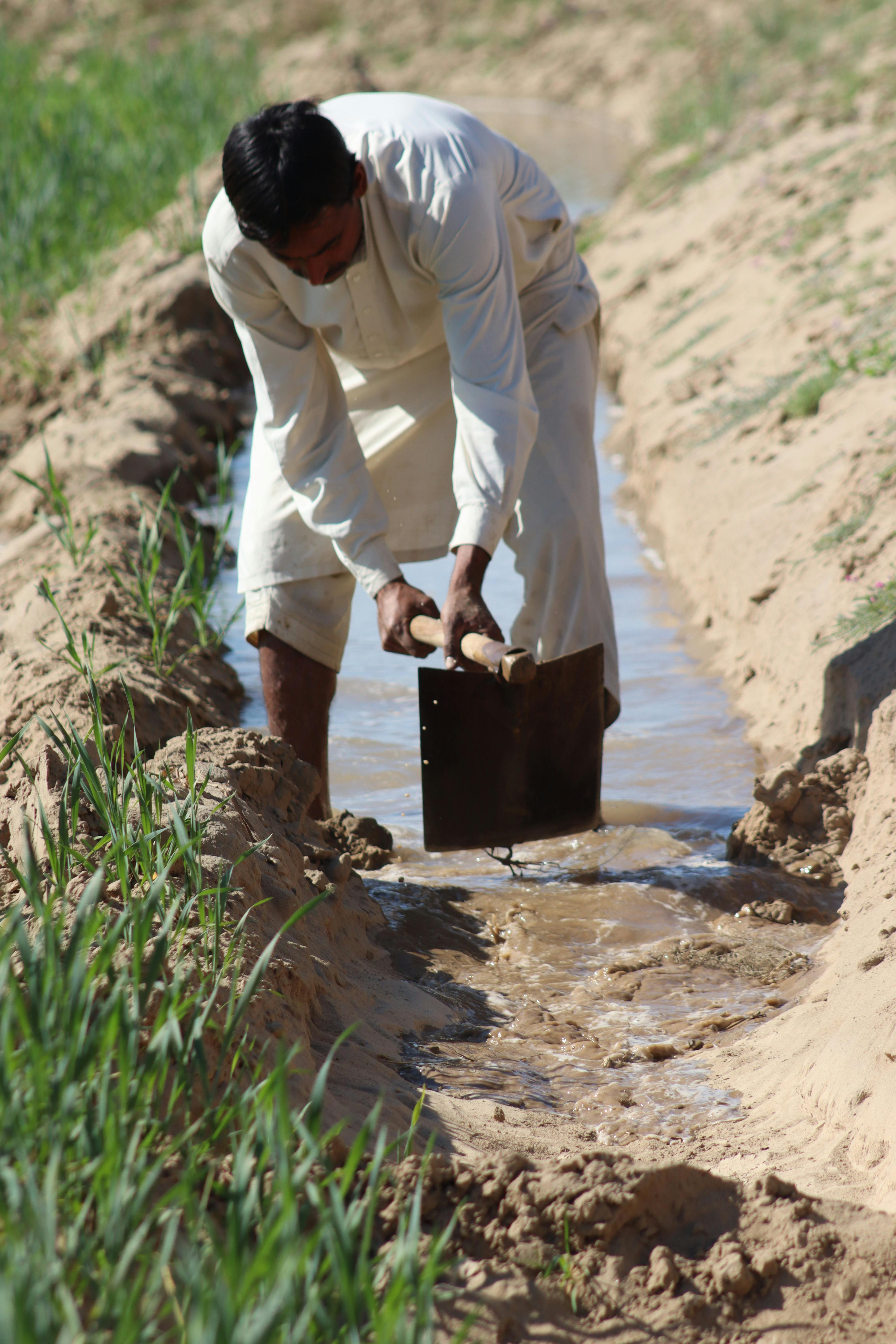
1. Understanding Soil Types and Water Holding Capacity
Before implementing any sensor-guided system, a fundamental understanding of your farm's soil composition is crucial. Different soil types—sandy, loamy, or clay—have varying capacities to hold water. Sandy soils drain quickly and require more frequent, smaller applications, while clay soils retain water longer and need less frequent but deeper irrigation. Conducting a simple soil test can provide invaluable information on your soil's texture and organic matter content, which directly influences its water retention properties.
- Conduct Soil Analysis: Take samples from different sections of your farm and have them analyzed for texture, pH, and organic matter.
- Categorize Farm Zones: Divide your farm into zones based on similar soil characteristics.
- Adjust Irrigation Strategies: Tailor irrigation schedules and sensor placement to the specific needs of each soil zone.
Boost your yields with theLaMotte Soil Test Kit for pH, NPK, and Micronutrients – available on Amazon, providing essential data for informed decisions.
2. Strategic Placement and Calibration of Soil Moisture Sensors
The effectiveness of soil moisture sensors hinges on their correct placement and regular calibration. Sensors should be installed at various depths within the crop's root zone to provide a comprehensive picture of moisture availability. For shallow-rooted crops, a single sensor at 15-20 cm might suffice, while deep-rooted crops benefit from sensors at 30 cm, 60 cm, or even deeper. Calibration ensures the sensor readings accurately reflect the actual soil moisture content in your specific soil type.
- Identify Root Zones: Determine the typical root depth of your crops at different growth stages.
- Install Multiple Sensors: Place sensors at representative locations and varying depths (e.g., shallow, mid-root, deep).
- Regular Calibration: Calibrate sensors against gravimetric soil moisture measurements or follow manufacturer guidelines to maintain accuracy.
- Monitor Data Continuously: Use the sensor data to establish baseline moisture levels and trigger points for irrigation.
For farmers seeking precise moisture readings, consider theKensun Smart Soil Moisture Sensor for Garden & Farm – available on Amazon, a crucial tool for data-driven irrigation.
3. Integrating Sensors with Automated Drip Systems for Precision Timing
The true power of soil moisture sensors is unleashed when integrated with automated drip irrigation systems. This integration allows for real-time, demand-driven irrigation. When sensors detect that moisture levels drop below a pre-set threshold, the system automatically initiates irrigation. This not only prevents over-watering but also ensures water is delivered precisely when the crops need it most, optimizing nutrient uptake and minimizing leaching.
- Choose Compatible Systems: Select drip irrigation controllers that can interface with soil moisture sensors.
- Set Thresholds: Define optimal moisture thresholds for different crop stages and soil types.
- Automate Schedules: Program your system to automatically turn on and off based on sensor readings.
- Manual Override Capability: Ensure you can manually override the system for specific situations like fertilizer application or heavy rainfall.
Explore sustainable organic farming solutions with Biofarm Kenya for more insights on integrating technology into your farm.
Case Studies, Examples, or Comparisons
The adoption of sensor-guided precision irrigation is transforming farms across Kenya, proving that even smallholder farmers can achieve significant gains. Consider the success story of Ms. Akinyi Omondi, a horticultural farmer in Naivasha. Facing consistent water scarcity and rising utility costs, Ms. Omondi invested in a modest drip irrigation system coupled with two soil moisture sensors in her greenhouse. Before integration, she irrigated her tomatoes every two days, often observing waterlogging or wilting. After implementing sensor-guided irrigation, her system now only waters when soil moisture drops below 45%. This adjustment has reduced her water consumption by an estimated 40% and, more remarkably, increased her tomato yields by 15% due to optimal water availability throughout the growth cycle. The improved plant health also led to a reduction in disease incidence, further boosting her profitability.
Another compelling example comes from the avocado farms in Murang'a. Farmers there, traditionally reliant on guesswork and calendar-based irrigation, found their trees under stress during dry spells. A pilot program introduced precision irrigation, utilizing multiple sensors placed at varying depths around the avocado trees. The results, as reported by the Food and Agriculture Organization (FAO) in Kenya, demonstrated that precise water application during critical growth stages not only improved fruit size and quality but also led to a 30% saving in water resources compared to conventional methods. These examples underscore the tangible benefits of moving beyond basic drip irrigation to a sensor-informed, precision approach, ensuring resilience against drought and enhancing productivity across varied agricultural landscapes in Kenya.
Common Mistakes to Avoid in Precision Irrigation
While precision irrigation offers immense benefits, several common pitfalls can diminish its effectiveness. Being aware of these errors and actively working to correct them is key to maximizing your system's potential.
- Ignoring Soil Type and Heterogeneity:
- Mistake: Assuming uniform soil conditions across the entire farm and using a single irrigation schedule.
- Correction: Conduct soil tests to identify different soil zones. Adapt sensor placement and irrigation schedules for each zone's specific needs.
- Improper Sensor Placement or Insufficient Coverage:
- Mistake: Placing sensors too shallow, too deep, or in unrepresentative areas, leading to inaccurate readings.
- Correction: Place sensors at multiple depths within the active root zone and in areas that best represent the average conditions of the irrigation zone. Use several sensors for larger areas.
- Lack of Calibration and Maintenance:
- Mistake: Installing sensors and never calibrating them or performing routine maintenance.
- Correction: Calibrate sensors regularly (e.g., seasonally or after heavy rainfall) and inspect them for damage or fouling. Clean probes as recommended by the manufacturer.
- Over-Reliance on Automated Systems Without Monitoring:
- Mistake: Setting up an automated system and assuming it will always work perfectly without human oversight.
- Correction: Regularly review sensor data and system performance. Walk through your fields to observe crop health and adjust thresholds or schedules as needed, especially during extreme weather events.
- Not Understanding Crop Water Requirements:
- Mistake: Irrigating based on generic schedules rather than the specific water needs of your crops at different growth stages.
- Correction: Research and understand the water requirements (Kc values) of your specific crops at various phenological stages. Adjust irrigation accordingly to avoid stress during critical periods.
- Poor Drip System Maintenance:
- Mistake: Clogged emitters, leaky pipes, or inconsistent pressure reducing the efficiency of water delivery.
- Correction: Regularly flush drip lines, check for and repair leaks, and ensure consistent water pressure across the system. Clean filters frequently to prevent clogging.
Expert Tips or Best Practices for Kenyan Farmers
For Kenyan farmers looking to maximize their yields while conserving precious water, integrating precision irrigation is a game-changer. Here are some expert tips to guide your journey:
- Start Small, Scale Up: If you're new to sensor-guided irrigation, begin with a pilot project on a small section of your farm. This allows you to learn and fine-tune your approach before a larger investment. Observe the results, make adjustments, and then gradually expand the system across your farm.
- Embrace Integrated Pest Management (IPM): Healthy, well-watered plants are more resilient to pests and diseases. By optimizing water delivery, you reduce plant stress, which can indirectly contribute to better pest management. Combine this with organic pest control methods for truly sustainable farming.
- Consider Evapotranspiration (ET) Data: For advanced precision, integrate local weather data (temperature, humidity, wind speed, solar radiation) with your soil moisture sensor readings to calculate evapotranspiration. This allows you to estimate how much water your crops are actually losing to the atmosphere and tailor irrigation even more precisely.
- Leverage Community Knowledge and Support: Join local farmer cooperatives or extension services. Share experiences, learn from peers who have adopted similar technologies, and seek advice from agricultural experts. Collective learning can accelerate your success.
- Invest in Quality Components: While cost is a factor, compromising on the quality of soil moisture sensors or drip irrigation components can lead to frequent breakdowns and inaccurate readings. Invest in durable, reliable equipment that offers long-term value. For those starting out or looking for reliable systems, a DripWorks Complete Drip Irrigation Kit for Small Farms – available on Amazon can provide a solid foundation.
- Optimize Nutrient Delivery with Fertigation: Precision irrigation allows for precise nutrient delivery through the drip system, a practice known as fertigation. This ensures fertilizers are delivered directly to the root zone, reducing waste and enhancing nutrient uptake. Maintain healthy soil with Bio-Grow Organic All-Purpose Fertilizer for Vegetables and Herbs for best results.
Remember, precision irrigation is an evolving process. Continuous learning, adaptation, and a willingness to embrace new technologies will be your greatest assets. Explore sustainable organic farming solutions with Biofarm Kenya to find partners and resources that can support your transition to more efficient and resilient farming practices.
Future Trends or Predictions in Agricultural Technology
The landscape of agriculture is rapidly evolving, driven by technological advancements aimed at increasing efficiency, sustainability, and resilience. For Kenyan farmers, staying abreast of these emerging trends is crucial for long-term success. One significant area of innovation is the development of even smarter irrigation systems. We can expect to see more widespread adoption of AI-driven platforms that integrate various data points—soil moisture, weather forecasts, satellite imagery, and crop health indices—to create highly dynamic and predictive irrigation schedules. These systems will not only tell you when and how much to water but also anticipate future needs based on growth models and environmental conditions.
Another exciting trend is the rise of low-cost, open-source sensor technologies. This will make precision farming tools more accessible to smallholder farmers, breaking down cost barriers that currently limit widespread adoption. Furthermore, the integration of drones and robotics for real-time crop monitoring and targeted intervention is on the horizon. Drones equipped with multispectral cameras can detect early signs of water stress or nutrient deficiencies across vast fields, allowing for immediate, localized adjustments to irrigation or fertilization. Vertical farming, particularly in urban and peri-urban areas, is also gaining traction, offering controlled environments that significantly reduce water usage through closed-loop systems. As these technologies mature, they promise to further empower Kenyan farmers to achieve higher yields with fewer resources, building a truly climate-resilient and economically vibrant agricultural sector.
Conclusion
In an era defined by climate unpredictability, the shift towards precision irrigation, driven by the intelligent integration of soil moisture sensors, is no longer a luxury but a necessity for Kenyan farmers. This guide has illuminated how embracing these technologies can lead to significant water savings of 30-50% and substantial yield boosts, transforming drought resilience into an achievable reality. By understanding your soil, strategically placing and calibrating sensors, and automating your drip systems, you can move beyond guesswork to data-driven water management. Avoiding common mistakes and adopting expert best practices will further solidify your farm's productivity and sustainability.
The future of agriculture in Kenya is smart, sustainable, and technology-driven. By leveraging precision irrigation today, you are not only securing your farm's future but also contributing to the broader goal of food security and environmental stewardship in the region. Embrace these innovations, learn continuously, and watch your farm thrive with every precisely delivered drop of water.
Discover trusted organic farming tools onAmazonandlearn more about sustainable solutions with Biofarm Kenya.
FAQs About Precision Irrigation and Soil Moisture Sensors
Q1: How much water can I realistically save by integrating soil moisture sensors with drip irrigation?
A: Farmers can realistically expect to save between 30% to 50% of water. This range depends on factors like crop type, soil type, existing irrigation efficiency, and the accuracy of sensor placement and calibration. Studies, including those cited by the World Bank on water management projects in East Africa, consistently show significant savings. Precision irrigation ensures water is applied only when and where needed, eliminating over-watering and reducing runoff and deep percolation.
Q2: What are the initial costs associated with setting up a sensor-guided drip irrigation system in Kenya?
A: The initial costs can vary widely based on the scale of your farm, the type and number of sensors, and the complexity of the automation system. A basic small-scale system (e.g., for a kitchen garden or a small plot) might start from KES 15,000-30,000, while a more advanced system for larger acreage could range from KES 100,000 to several hundreds of thousands. Factors influencing cost include sensor technology (capacitive vs. TDR), controller sophistication, and professional installation services. Many organizations and government initiatives, such as those promoted by the Ministry of Agriculture, Livestock, Fisheries and Cooperatives, offer subsidies or training to reduce this barrier.
Q3: Are soil moisture sensors compatible with all types of crops grown in Kenya?
A: Yes, soil moisture sensors are compatible with virtually all types of crops grown in Kenya, from staple crops like maize and beans to high-value horticultural crops like tomatoes, avocados, and flowers. The key is to select the right type of sensor for your specific crop and soil and to place it correctly within the root zone. Different crops have different water uptake patterns and root depths, which should guide sensor placement and the setting of irrigation thresholds. For specific crop guidelines, resources from research institutions like KALRO (Kenya Agricultural and Livestock Research Organization) can be invaluable.
Q4: How often do soil moisture sensors need to be calibrated or maintained?
A: Regular calibration and maintenance are crucial for accurate readings. It's generally recommended to calibrate sensors at least once a season, or if you notice inconsistent readings or significant changes in soil conditions. Maintenance involves periodically cleaning the sensor probes to remove soil buildup, checking for damage, and ensuring secure connections. Some advanced sensors are 'self-calibrating' to a degree, but a manual check against gravimetric soil moisture is always a good practice. Consult the manufacturer's guidelines for specific recommendations. Biofarm Kenya provides guidance on sensor care on their platform: Biofarm Kenya Sensor Maintenance Guide.
Q5: Can I integrate soil moisture sensors with an existing drip irrigation system, or do I need a completely new setup?
A: In most cases, you can integrate soil moisture sensors with an existing drip irrigation system. You typically need to add a compatible irrigation controller that can receive input from the sensors and manage your existing drip valves. This often involves retrofitting your current setup rather than a complete overhaul. Consult with an irrigation specialist or your drip system provider to ensure compatibility and smooth integration. Resources from organizations like NEMA (National Environment Management Authority) often promote sustainable agricultural practices that include upgrading existing systems.
Q6: Where can I find reliable training and support for precision irrigation in Kenya?
A: Several avenues offer reliable training and support. Agricultural extension services from county governments are a primary resource. Non-governmental organizations (NGOs) focused on sustainable agriculture often run programs and workshops. Agricultural universities and research institutions (like Egerton University or KALRO) also provide valuable insights and short courses. Additionally, private companies specializing in irrigation technology frequently offer training as part of their product packages. Biofarm Kenya also provides a wealth of information and connects farmers to expert resources through their Precision Irrigation Resources page and their network of Biofarm Kenya Partners.
Further Reading & Resources:
- Food and Agriculture Organization of the United Nations (FAO) in Kenya
- Ministry of Agriculture, Livestock, Fisheries and Cooperatives, Kenya
- National Environment Management Authority (NEMA), Kenya
- World Bank Kenya: Agriculture & Water Resources
- Kenya Agricultural and Livestock Research Organization (KALRO)
- Biofarm Kenya: Water Conservation Techniques
- Biofarm Kenya: Drip Irrigation Basics
- Biofarm Kenya: Smart Farming Training
- Biofarm Kenya: Organic Fertilizers
- Biofarm Kenya: Farmer Success Stories
- Biofarm Kenya: AgTech Innovations


0 Comments